

Course: Professional diploma in Interior Design & AI for Interior Design
 Array
Array



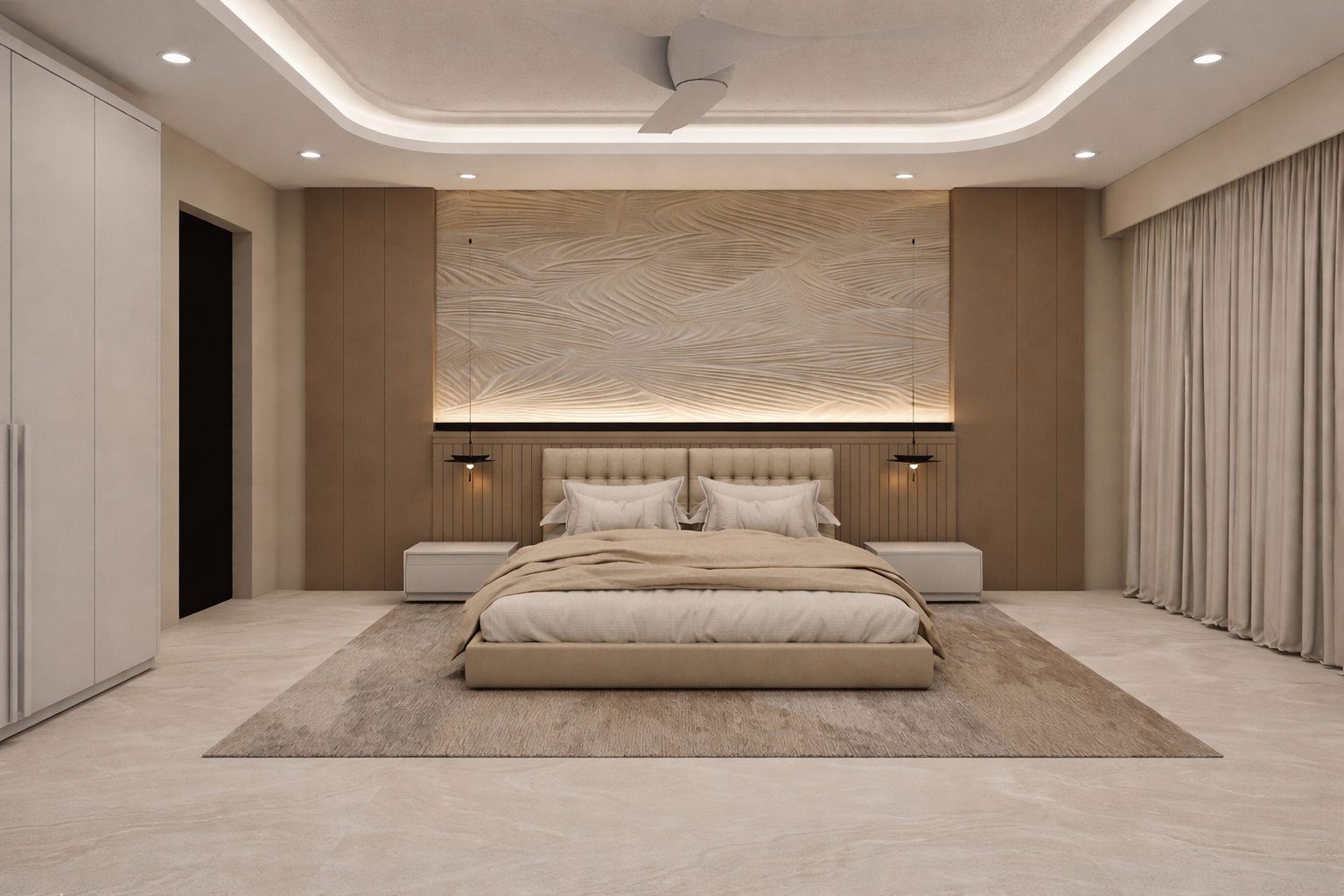
This project focuses on designing a modern, elegant residence for Shaurya Sharma, a business owner based in Shalimar Bagh, Delhi. The design vision emphasizes openness, functionality, and understated luxury, with a neutral color palette complemented by premium materials like marble, wood, and quartz. The planning prioritizes an open floor layout with strong spatial connectivity, natural ventilation, and ample daylight through large windows, skylights, and balconies. The home includes three bedrooms with attached bathrooms and walk-in wardrobes, along with living, dining, kitchen, utility, and storage spaces to support comfortable family living. Site analysis considers sun path, wind direction, and environmental factors to enhance thermal comfort and energy efficiency. The concept, titled “The Haven,” reflects a balance between comfort, luxury, and a welcoming atmosphere. Case studies and concept inspirations highlight courtyard planning, spatial layering, and integration of indoor-outdoor spaces. Overall, the design aims to create a timeless, functional, and refined living environment that supports both lifestyle and aesthetic aspirations.
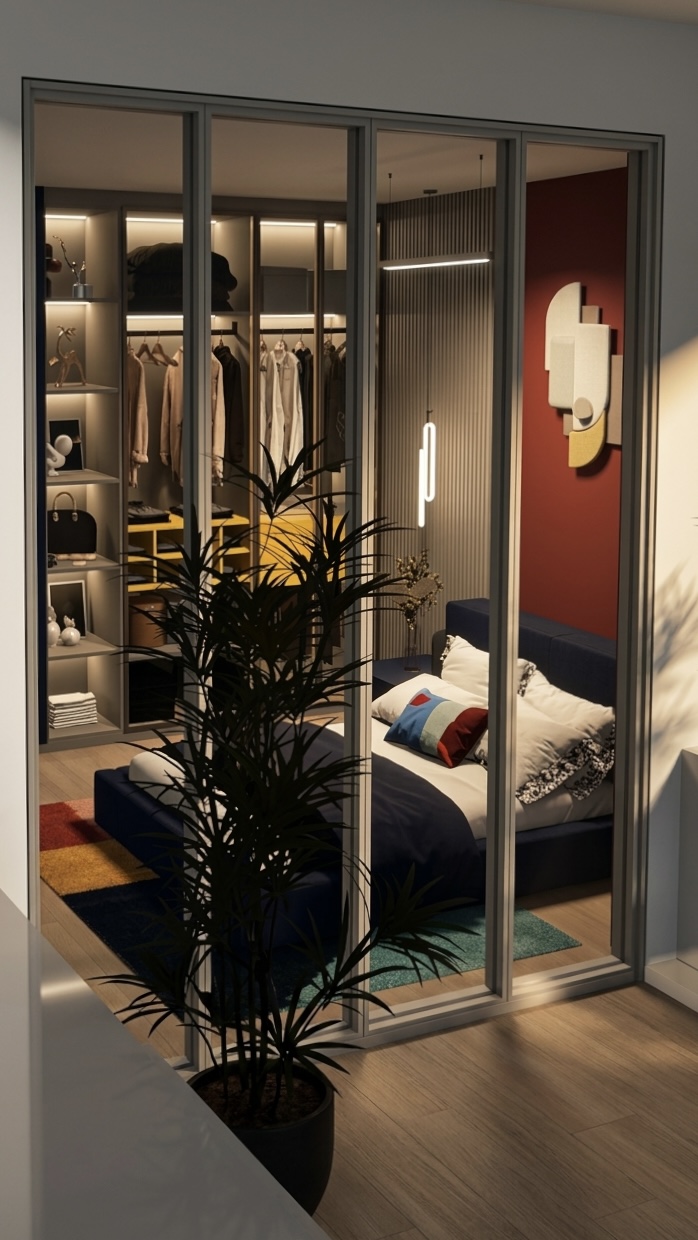
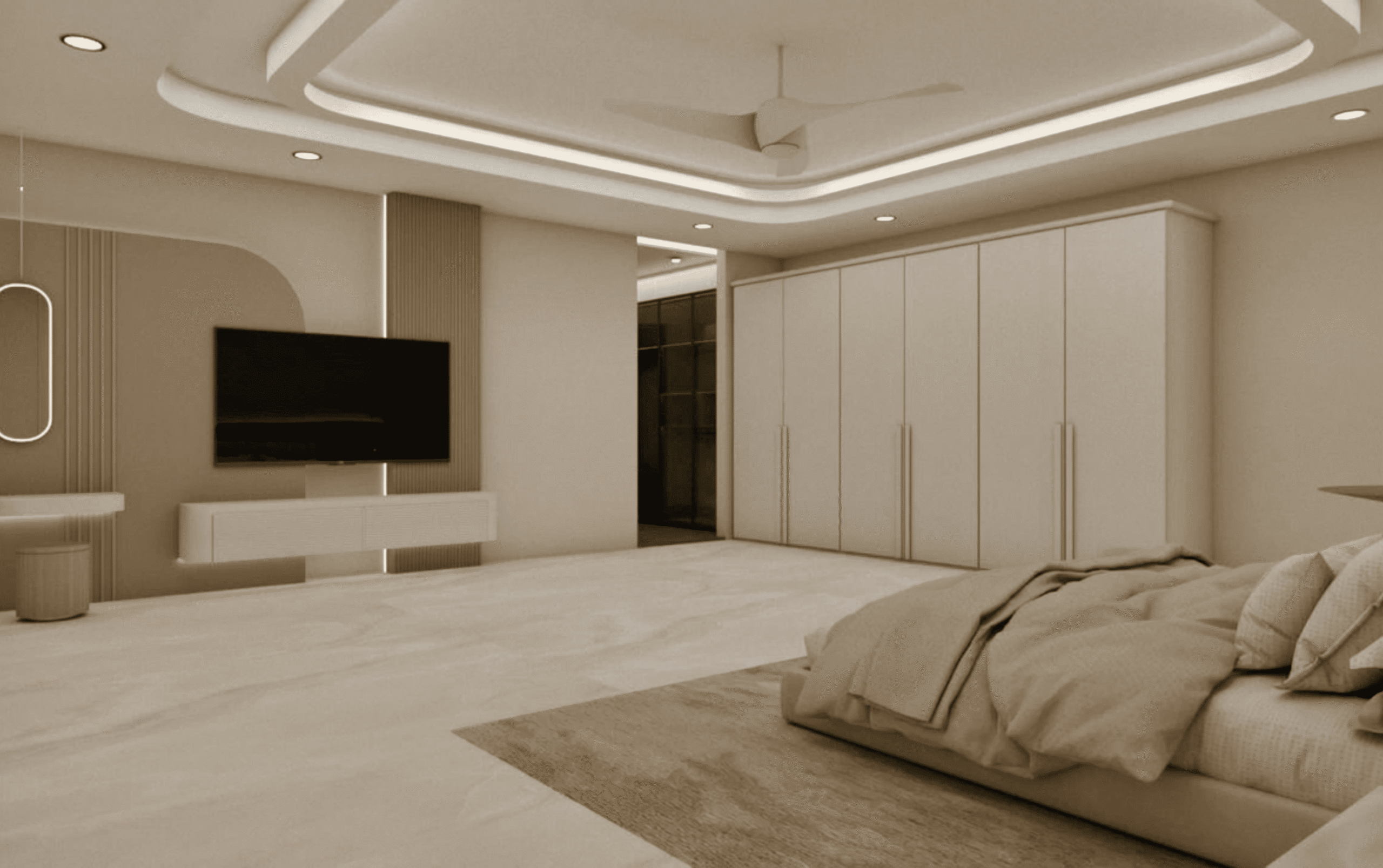
A contemporary maximalist studio apartment that celebrates depth, contrast, and curated expression within a compact space. The design strategically combines bold colors, varied textures, and integrated lighting to create distinct yet fluid zones for sleeping, storage, and relaxation. Glass partitions enhance spatial openness while maintaining functional separation, allowing light to flow freely across the interior. Custom shelving and wardrobe systems add both utility and visual richness, turning everyday storage into a design feature. The interplay of warm lighting, accent walls, and soft furnishings builds a cozy yet dynamic atmosphere. This project redefines small-space living by embracing a “more is more” philosophy—where layering elements thoughtfully results in a space that feels expansive, personalized, and visually engaging.
This project presents a thoughtfully curated office space designed in the Bohemian (Boho) interior style — a design language rooted in free-spirited expression, natural textures, warm earthy tones, and an eclectic mix of patterns and organic materials. The goal was to transform a functional workspace into an environment that feels both creatively inspiring and comfortably grounded. Design Process The project follows a two-stage client presentation approach. In the first stage, a design board is crafted — a carefully composed visual collage of materials, colour palettes, furniture references, textiles, and mood imagery that communicates the overall look and feel of the space. This serves as an accessible, cost-effective tool for clients who do not have the budget for a full 3D render, yet still need a clear and tangible vision of the proposed design. In the second stage, AI-powered visualisation is used to translate the design concept into a photorealistic 3D image of the space — giving the client a near-realistic preview of their interior without the time and cost traditionally associated with professional 3D rendering software. Outcome This workflow bridges the gap between concept and reality, making high-quality interior design presentation accessible at every budget level. The Boho office design, rich in layered textures, woven elements, indoor greenery, and warm ambient lighting, demonstrates how a workspace can be both professionally functional and aesthetically soulful — a space that motivates, inspires, and reflects the personality of those who inhabit it.
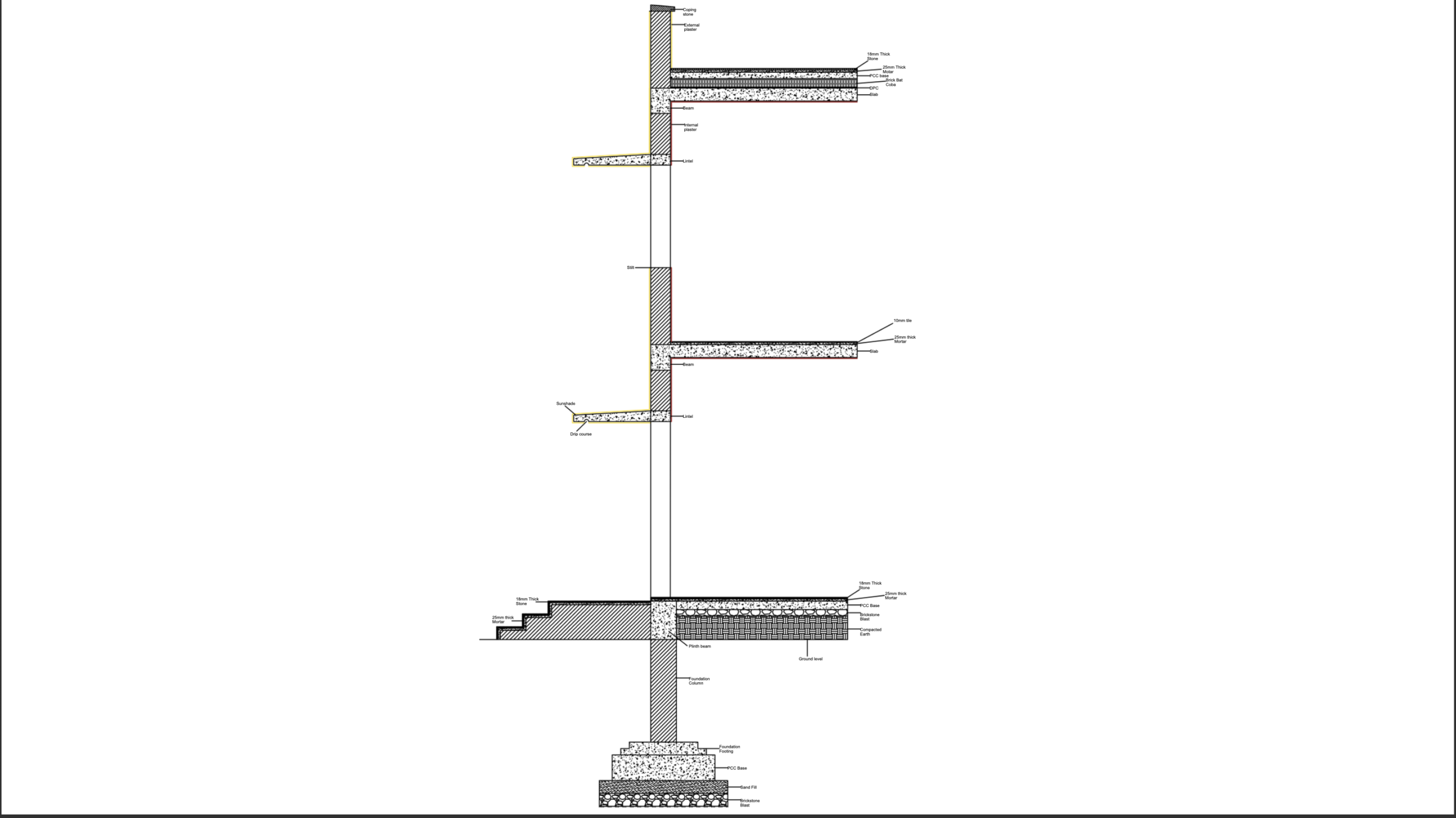
This project presents a typical sectional drawing of a residential building, illustrating the construction details from the foundation level up to the roof. The section shows key structural components such as the footing, foundation column, plinth beam, floor slabs, beams, lintels, sunshades, and roof slab. It also includes finishing elements like internal and external plaster, flooring tiles, coping stones, damp proof course (DPC), and waterproofing using brick bat Coba. The drawing provides a clear understanding of how different building elements are arranged and connected vertically, making it an essential reference for studying building construction techniques and material layering.
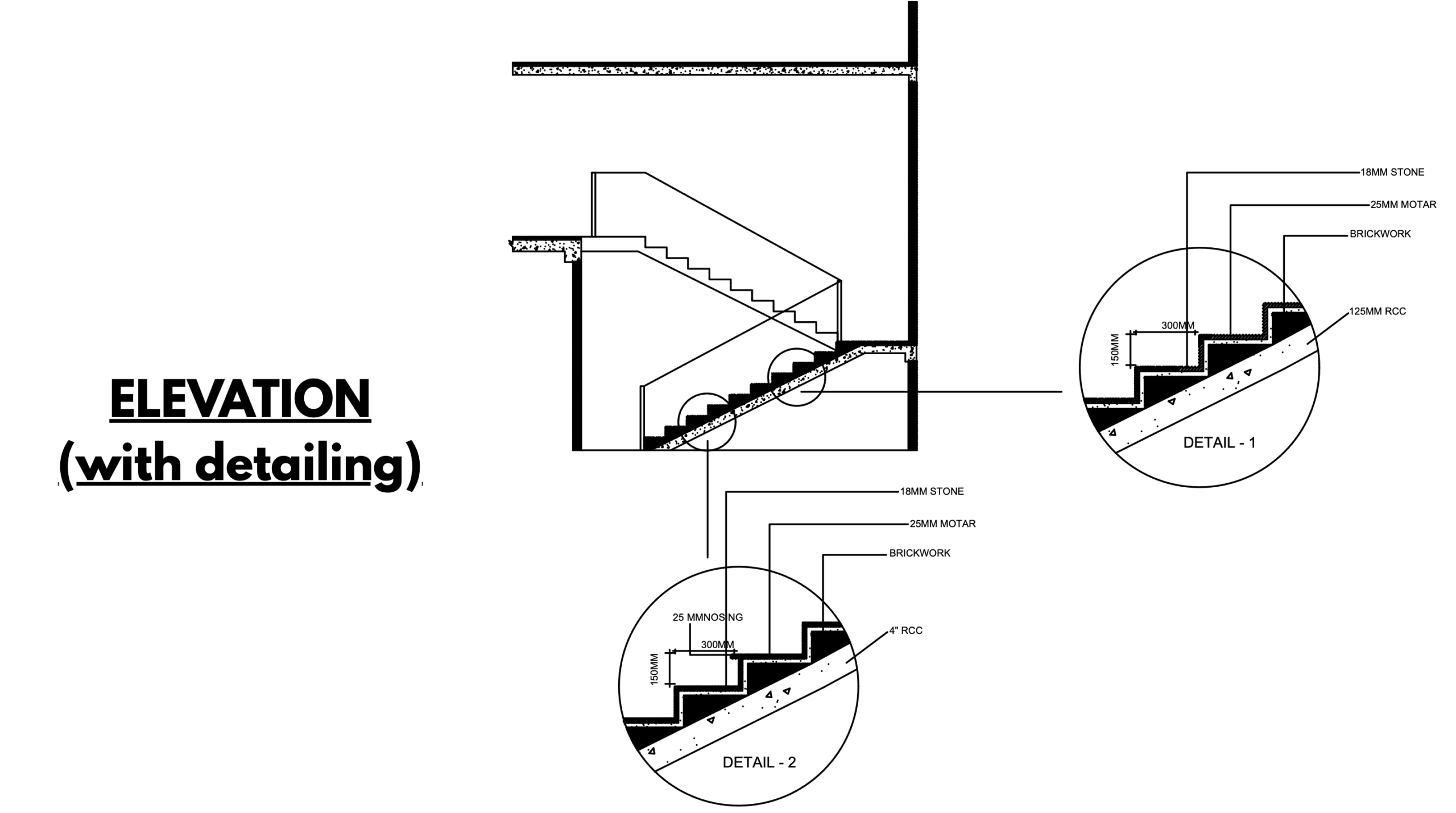
his drawing presents a sectional detail of a reinforced concrete staircase supported by brick masonry. The main stair structure consists of a 125 mm (4-inch) RCC slab, finished with 25 mm mortar and 18 mm stone treads. Each step has a tread of 300 mm and a riser of 150 mm, which provides comfortable proportions for stair use. A 25 mm nosing is included at the edge of each step to improve durability and safety. Two enlarged construction details are shown to illustrate the exact layering and dimensions of the stair finishes. The section demonstrates how the RCC waist slab rests on brickwork, with stone cladding applied over the mortar bed. This model effectively communicates the structural system, finishing materials, and dimensional requirements used in typical residential or commercial stair construction.

 245
245
 274
274

2025 2025
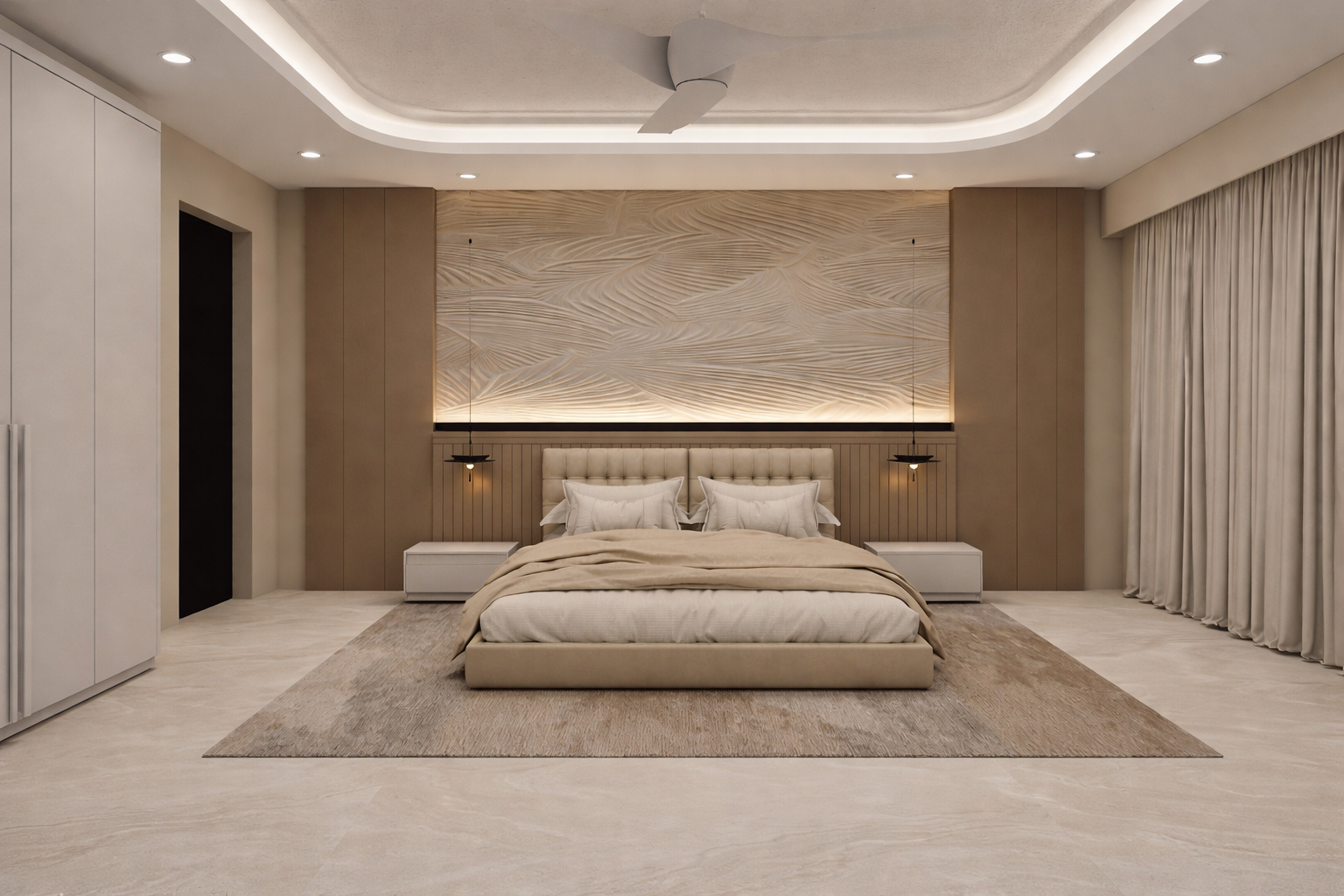
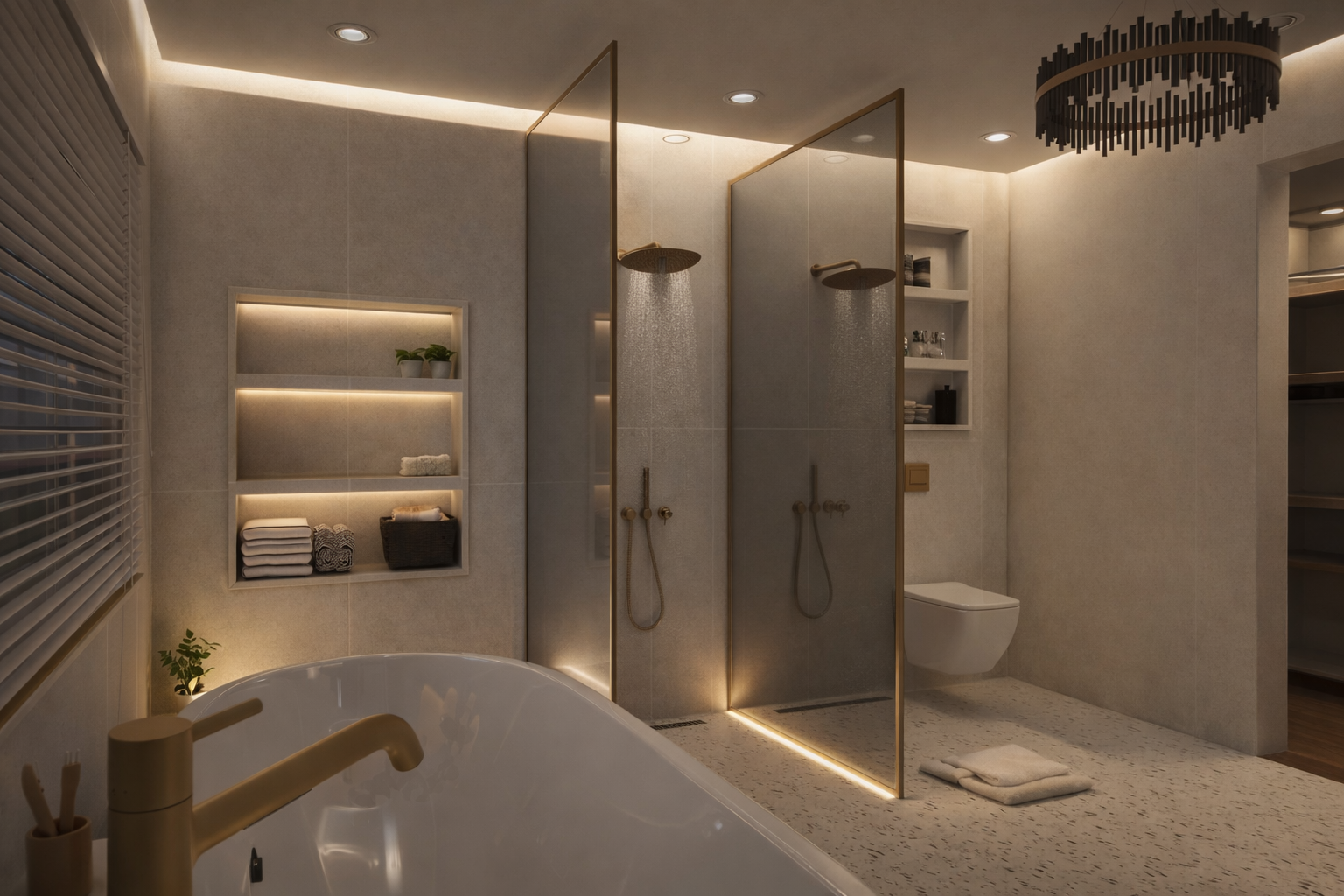
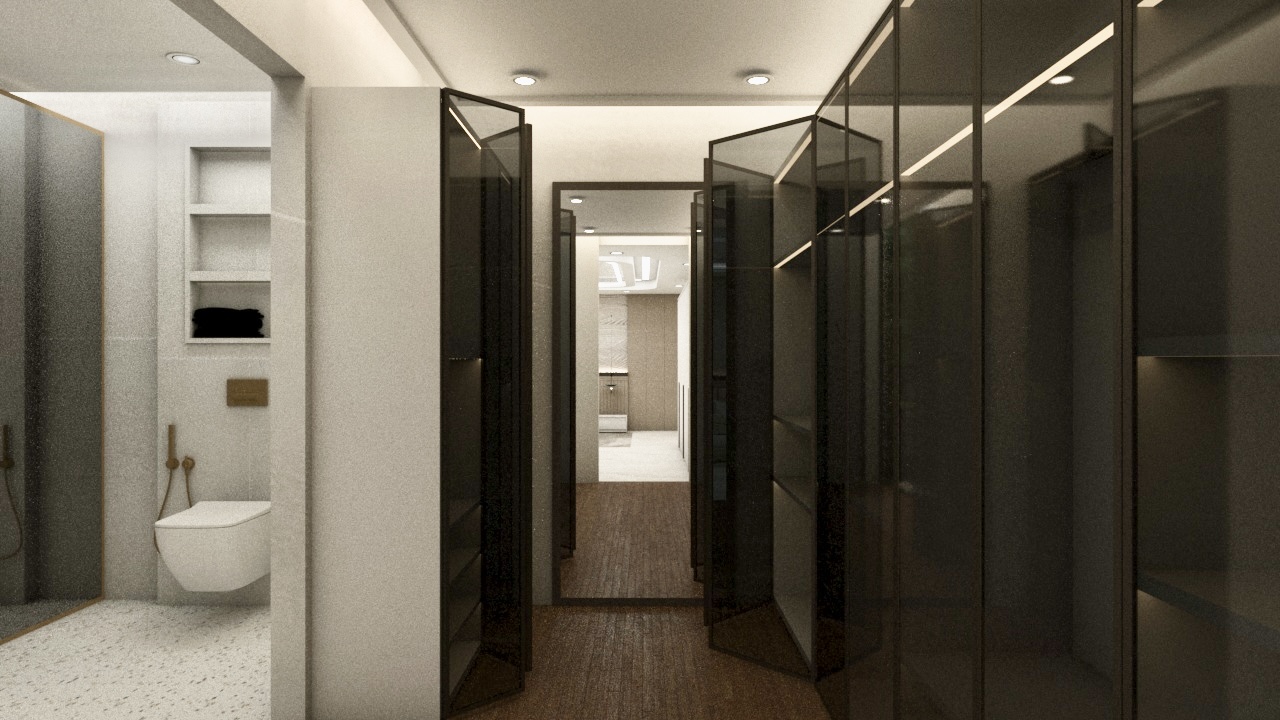
This project focuses on designing a modern, elegant residence for Shaurya Sharma, a business owner based in Shalimar Bagh, Delhi. The design vision emphasizes openness, functionality, and understated luxury, with a neutral color palette complemented by premium materials like marble, wood, and quartz.
The planning prioritizes an open floor layout with strong spatial connectivity, natural ventilation, and ample daylight through large windows, skylights, and balconies. The home includes three bedrooms with attached bathrooms and walk-in wardrobes, along with living, dining, kitchen, utility, and storage spaces to support comfortable family living.
Site analysis considers sun path, wind direction, and environmental factors to enhance thermal comfort and energy efficiency. The concept, titled “The Haven,” reflects a balance between comfort, luxury, and a welcoming atmosphere.
Case studies and concept inspirations highlight courtyard planning, spatial layering, and integration of indoor-outdoor spaces. Overall, the design aims to create a timeless, functional, and refined living environment that supports both lifestyle and aesthetic aspirations.
2025 2025
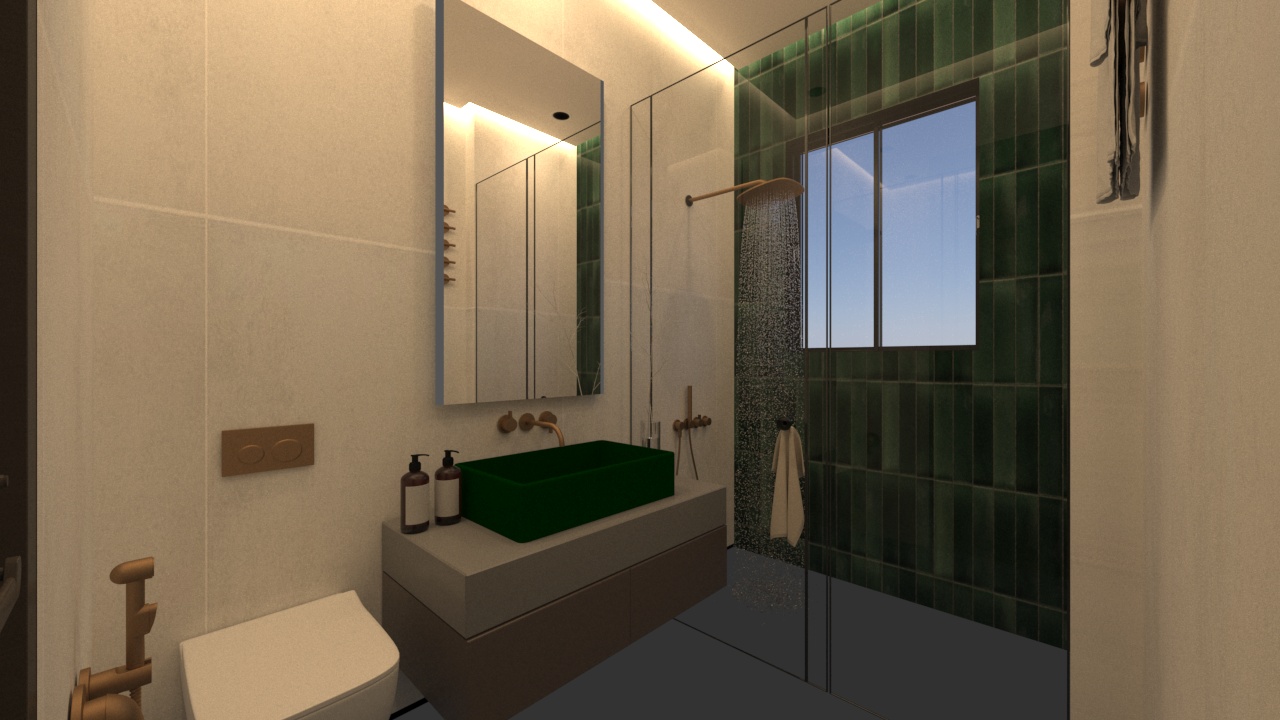
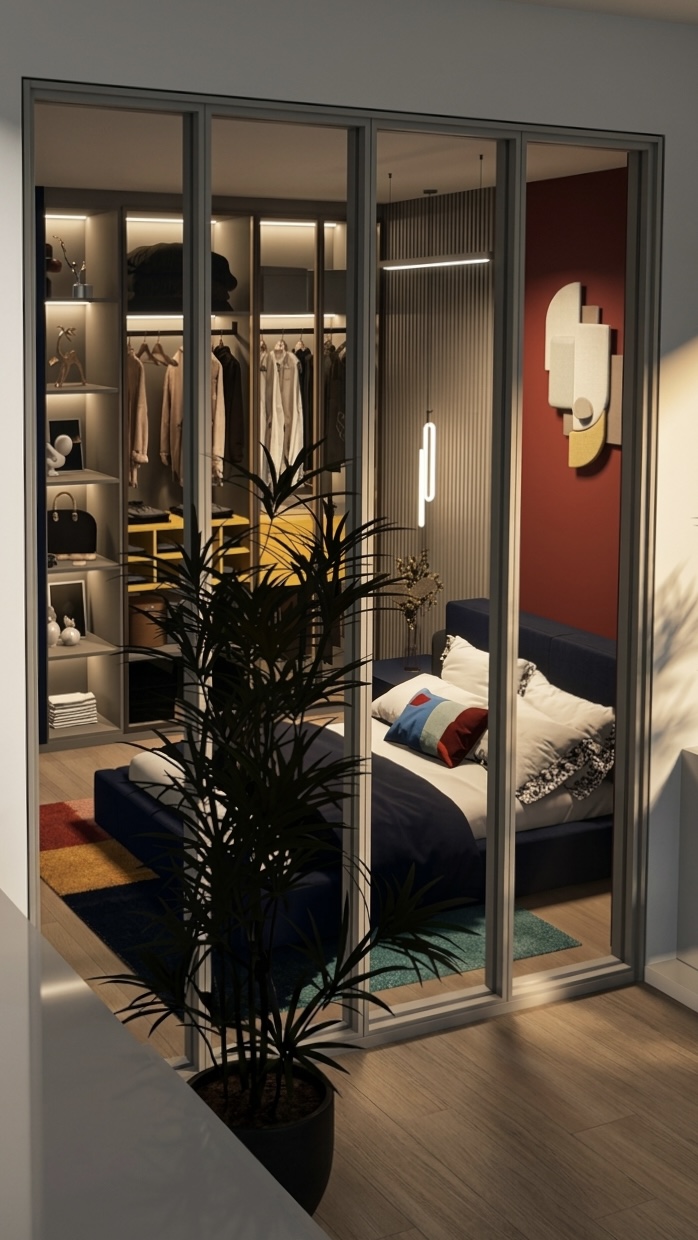
A contemporary maximalist studio apartment that celebrates depth, contrast, and curated expression within a compact space. The design strategically combines bold colors, varied textures, and integrated lighting to create distinct yet fluid zones for sleeping, storage, and relaxation.
Glass partitions enhance spatial openness while maintaining functional separation, allowing light to flow freely across the interior. Custom shelving and wardrobe systems add both utility and visual richness, turning everyday storage into a design feature. The interplay of warm lighting, accent walls, and soft furnishings builds a cozy yet dynamic atmosphere.
This project redefines small-space living by embracing a “more is more” philosophy—where layering elements thoughtfully results in a space that feels expansive, personalized, and visually engaging.
2025 2025
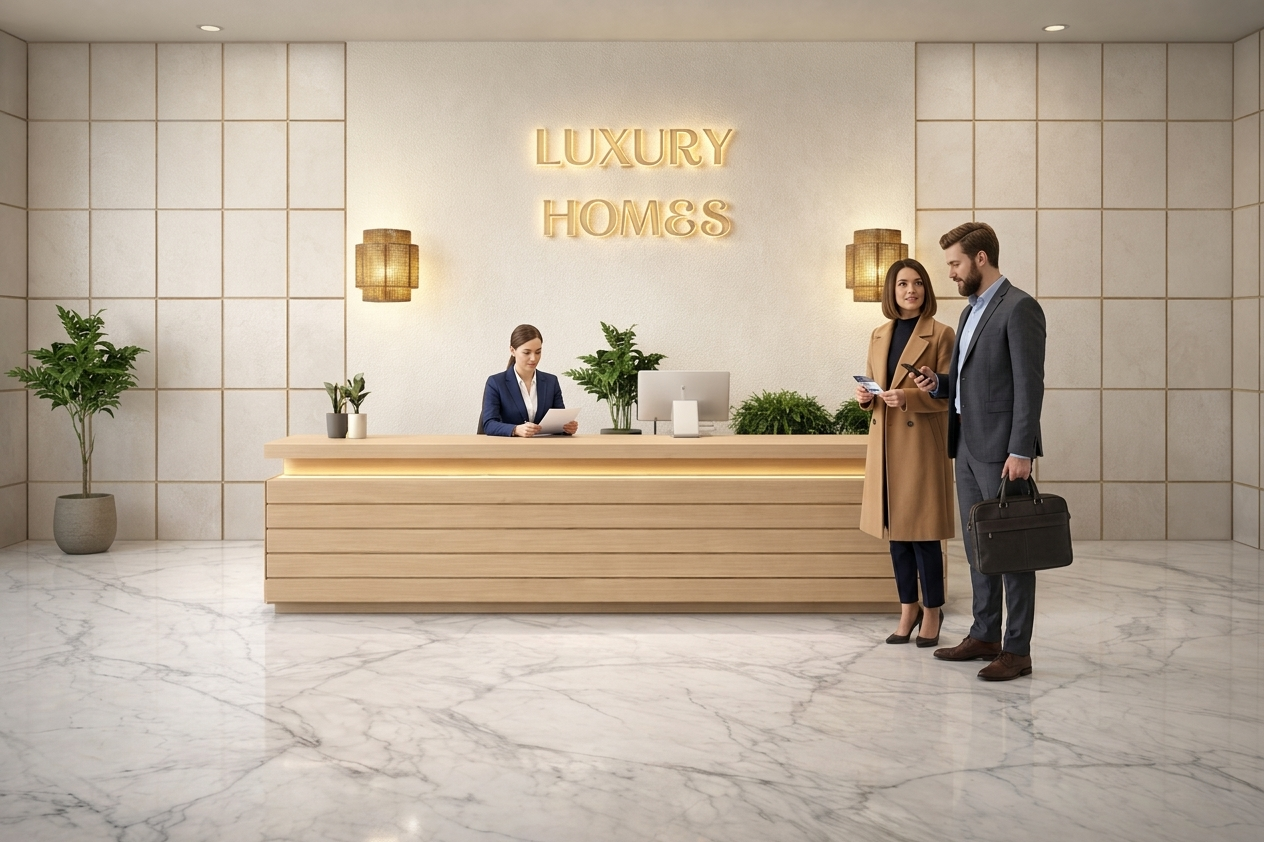
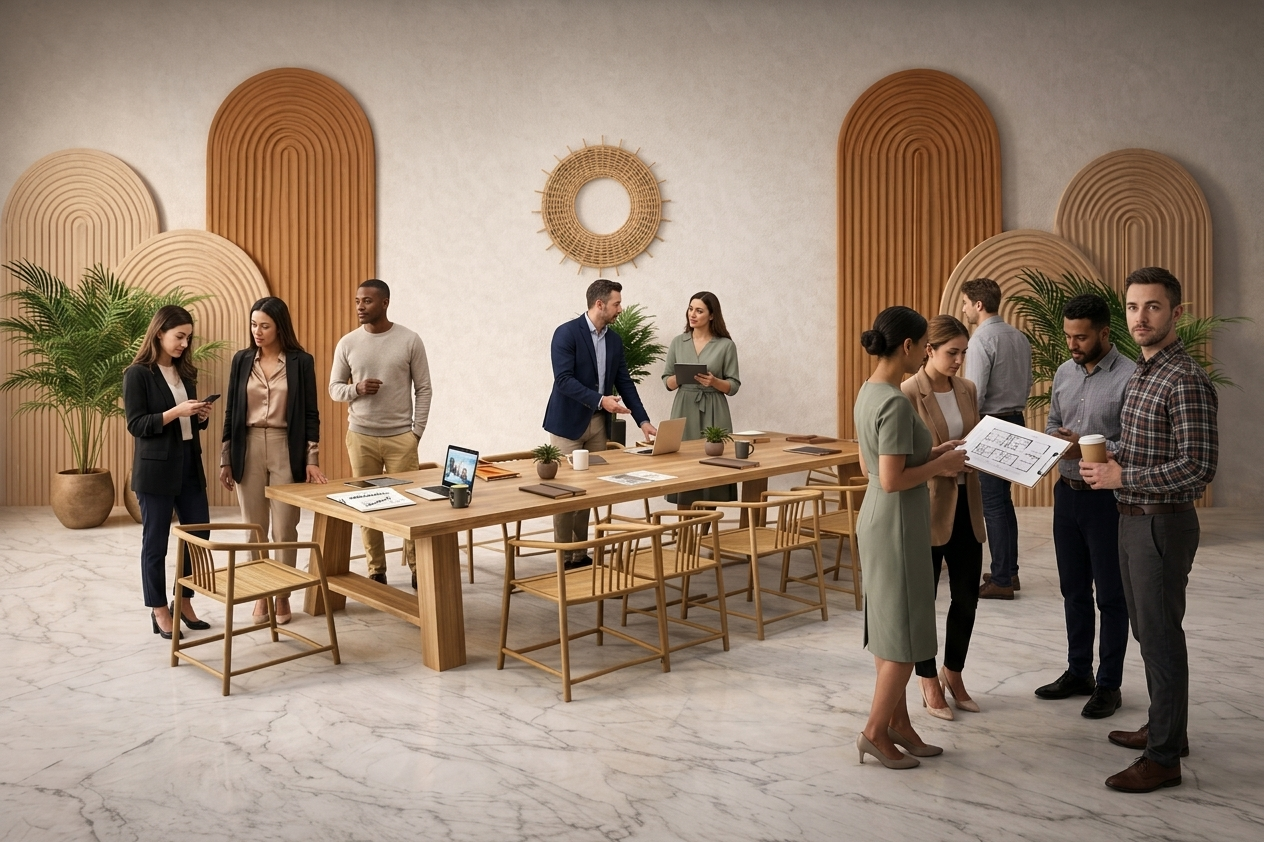
This project presents a thoughtfully curated office space designed in the Bohemian (Boho) interior style — a design language rooted in free-spirited expression, natural textures, warm earthy tones, and an eclectic mix of patterns and organic materials. The goal was to transform a functional workspace into an environment that feels both creatively inspiring and comfortably grounded.
Design Process
The project follows a two-stage client presentation approach. In the first stage, a design board is crafted — a carefully composed visual collage of materials, colour palettes, furniture references, textiles, and mood imagery that communicates the overall look and feel of the space. This serves as an accessible, cost-effective tool for clients who do not have the budget for a full 3D render, yet still need a clear and tangible vision of the proposed design.
In the second stage, AI-powered visualisation is used to translate the design concept into a photorealistic 3D image of the space — giving the client a near-realistic preview of their interior without the time and cost traditionally associated with professional 3D rendering software.
Outcome
This workflow bridges the gap between concept and reality, making high-quality interior design presentation accessible at every budget level. The Boho office design, rich in layered textures, woven elements, indoor greenery, and warm ambient lighting, demonstrates how a workspace can be both professionally functional and aesthetically soulful — a space that motivates, inspires, and reflects the personality of those who inhabit it.
2025 2025
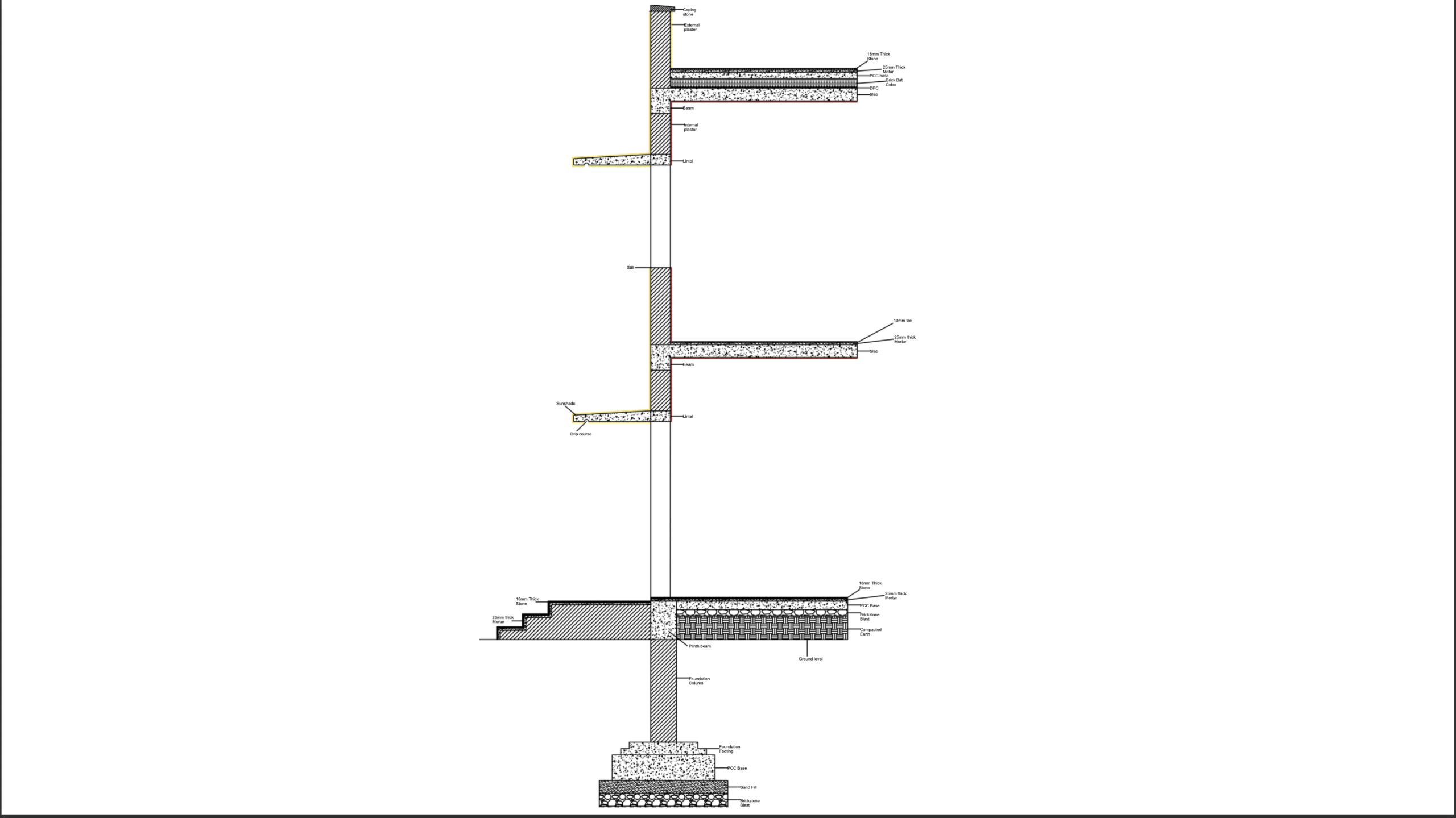
This project presents a typical sectional drawing of a residential building, illustrating the construction details from the foundation level up to the roof. The section shows key structural components such as the footing, foundation column, plinth beam, floor slabs, beams, lintels, sunshades, and roof slab. It also includes finishing elements like internal and external plaster, flooring tiles, coping stones, damp proof course (DPC), and waterproofing using brick bat Coba. The drawing provides a clear understanding of how different building elements are arranged and connected vertically, making it an essential reference for studying building construction techniques and material layering.
2025 2025
his drawing presents a sectional detail of a reinforced concrete staircase supported by brick masonry. The main stair structure consists of a 125 mm (4-inch) RCC slab, finished with 25 mm mortar and 18 mm stone treads. Each step has a tread of 300 mm and a riser of 150 mm, which provides comfortable proportions for stair use. A 25 mm nosing is included at the edge of each step to improve durability and safety.
Two enlarged construction details are shown to illustrate the exact layering and dimensions of the stair finishes. The section demonstrates how the RCC waist slab rests on brickwork, with stone cladding applied over the mortar bed. This model effectively communicates the structural system, finishing materials, and dimensional requirements used in typical residential or commercial stair construction.

I believe great design is born where function meets feeling. Having worked in construction before transitioning into design, I understand spaces not just aesthetically, but structurally — which shapes every decision I make. For me, a well-designed space should tell a story — one that reflects the personality of the people who live in it, while remaining practical and purposeful. I believe in designing with intention, where every element, from layout to lighting, serves a reason. I also embrace the evolving role of technology in design. By integrating AI into my creative process, I aim to push boundaries, work smarter, and deliver spaces that are both timeless and forward-thinking. At the core of my philosophy is a simple belief — good design should feel effortless to live in.


About Us
About Us
The Academy of Applied Arts, with 14 years of heritage, specializes in transformative design. They are experts in crafting luxurious, timeless interiors and architecture, showcased across 6 countries, notably in New Delhi.
2020
Ranked among the
by the academic insights
2019
Ranked among the
by the academic insights
2018
Ranked among the
by the academic insights
2017
Ranked among the
by the academic insights
2016
Ranked among the
by the academic insights


